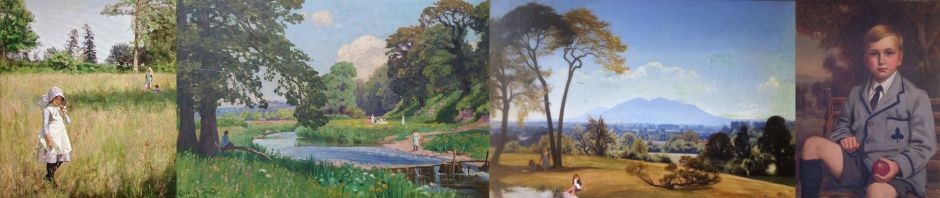
Over the past year, few Cecil Round paintings have been offered for sale on the open market. As such, we were grateful to hear from Charles Ucheobi of Gunnersbury Arts in Hampstead, London. They are bringing to the market a fine painting by Cecil Round that captures the landscape at St Cross, Winchester.
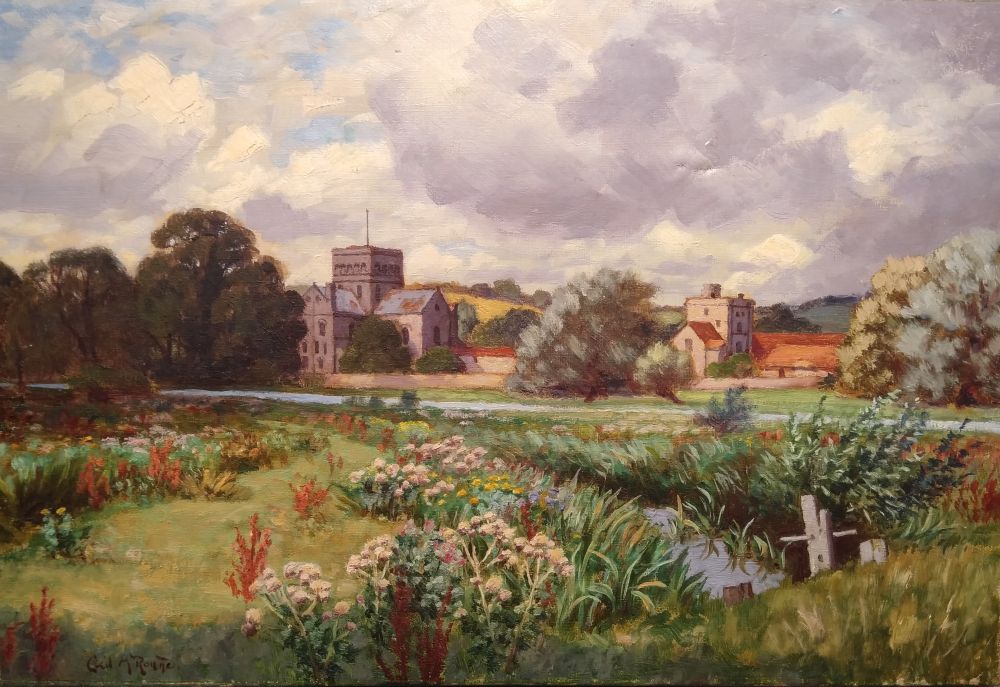 The Hospital of St Cross and Almshouse of Noble Poverty is a medieval almshouse in Winchester. Described by Simon Jenkins in his book, England’s Thousand Best Churches, as “England’s oldest and most perfect almshouse”, the building is constructed of stone and surrounds two quadrangles.
The smaller Outer Quadrangle to the north consists of a sixteenth century outer gate, a fifteenth century guest wing, kitchen, porter’s lodge and three-storey Beaufort Tower, along with a fourteenth century brewhouse.
The adjacent church dates from the twelfth and thirteenth century and is more reminiscent of a miniature cathedral than of a typical almshouse chapel. The building is stone-vaulted throughout, with transepts and a central tower. The walls are over a metre thick and the roof is constructed from lead. Today, the majority of the buildings and grounds are open to the public at set times throughout the year.
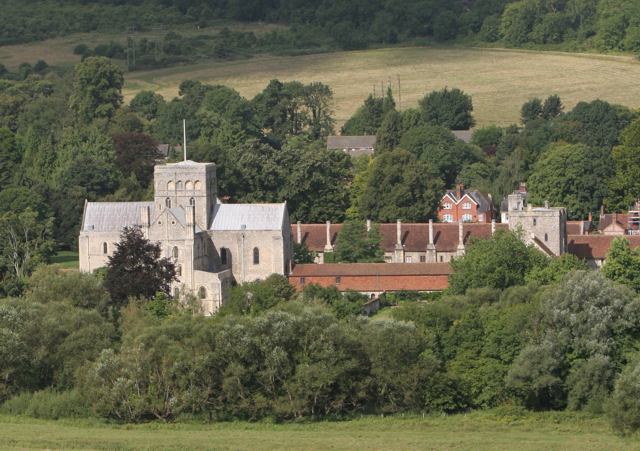
Photo courtesy of Peter Facey, CC BY-SA 2.0, https://commons.wikimedia.org/w/index.php?curid=3295567
Cecil Round’s painting dates from 1926 which is a period he is also known to have painted other local landscapes around Winchester. Signed on the front but also signed, titled and dated on the verso, the medium is oil on canvas. The picture is currently unframed but affords a wonderful opportunity for the prospective purchaser to frame the canvas to their individual taste.
In what currently appears to be quite a closed market, this is a fantastic opportunity for new collectors to enter the market or for existing owners of Cecil Round’s work to expand their collection. You will find full details of the sale at Gunnersbury Arts.
 Welcome to our eleventh ‘Spotlight Feature’. With the summer months drawing rapidly to a close and, as the younger generation start preparing to return to school for another academic year, it seems an appropriate time to feature two wonderful paintings from the Harrison family; now nearly one hundred years old.
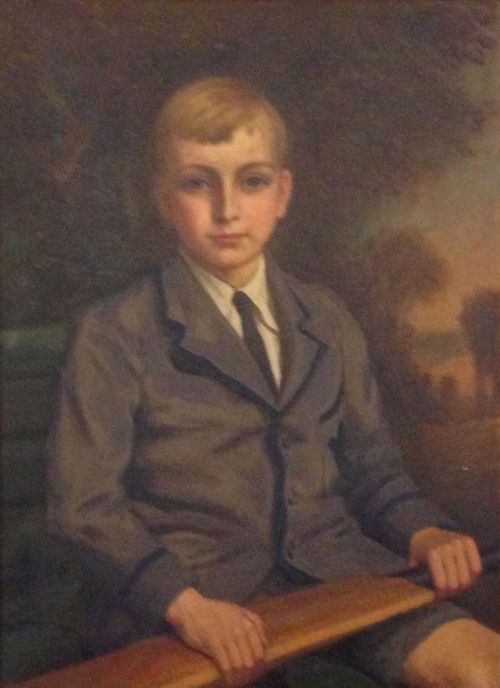 Celia Halsey kindly contacted us last year with news about two paintings that have been in her family since they were commissioned in 1920. The subject of the paintings – her maternal grandfather, Charles George Harrison (aged 11 in 1920), and his younger brother, Stanley Ridd Harrison (aged 9). Both boys are wearing their school uniform, with Charles brandishing a cricket bat and George, the corresponding cricket ball.
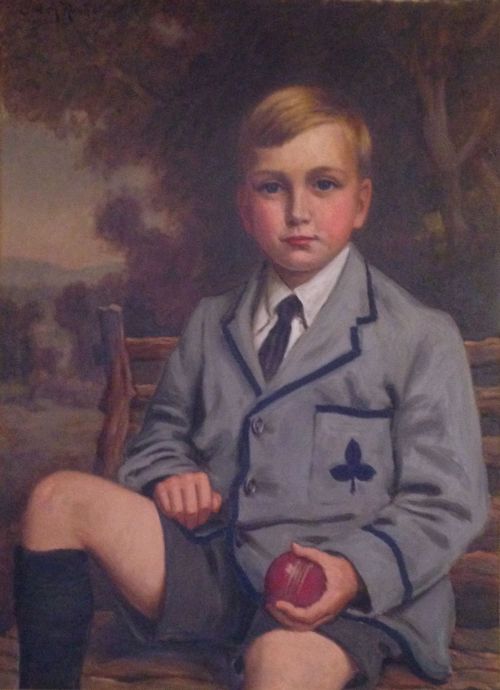 Celia takes up the story: “I have previously understood from my grandfather, that his parents commissioned these paintings from an artist friend and that there was some element of ‘helping him out after the war’ – either by the commissions themselves or the paintings being in lieu of owed money. However, no-one had been able to remember who the artist was. Now that I have inherited the second portrait from a great aunt, (reuniting them for the first time in 50 years) I was very pleased to find the signature in the top left-hand corner of ‘Stanley’.”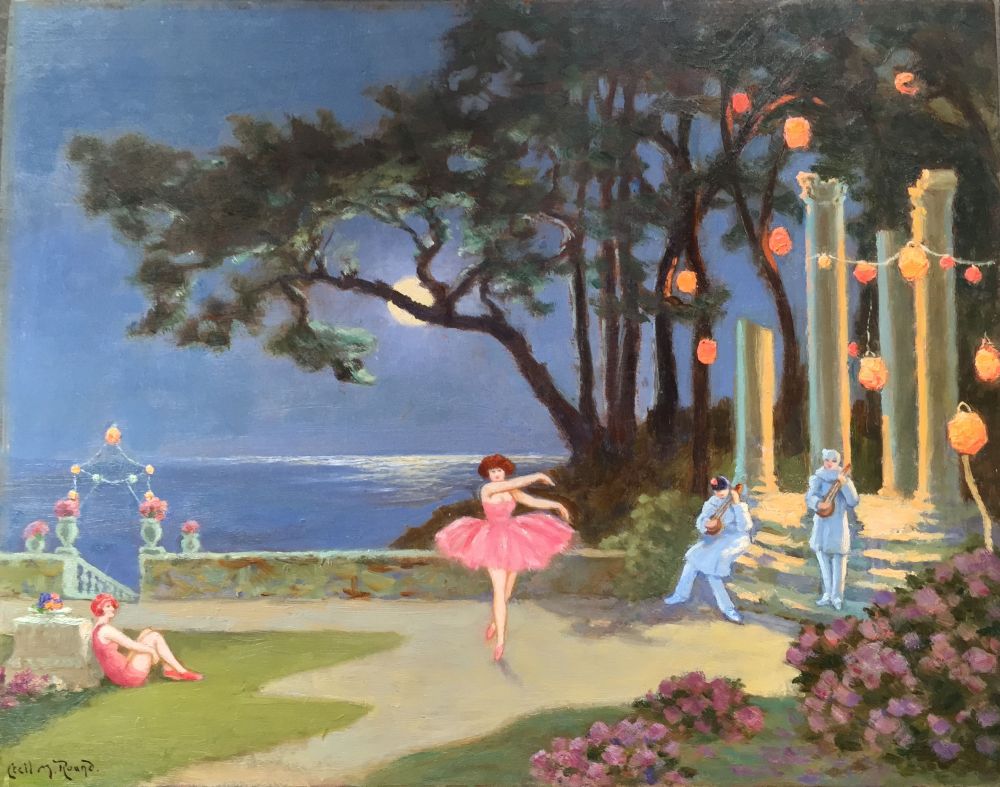
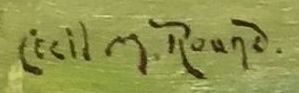 Initially failing to sell, it was then offered for sale through an alternative auction house, where it sold as a real bargain! In fairness though, the low price may in part have been due to the auctioneer’s attribution of the painting to ‘a follower of Cecil Round’, rather than to Cecil Round himself, despite a clear signature in the bottom corner, appearing to be unquestionably that of the artist.
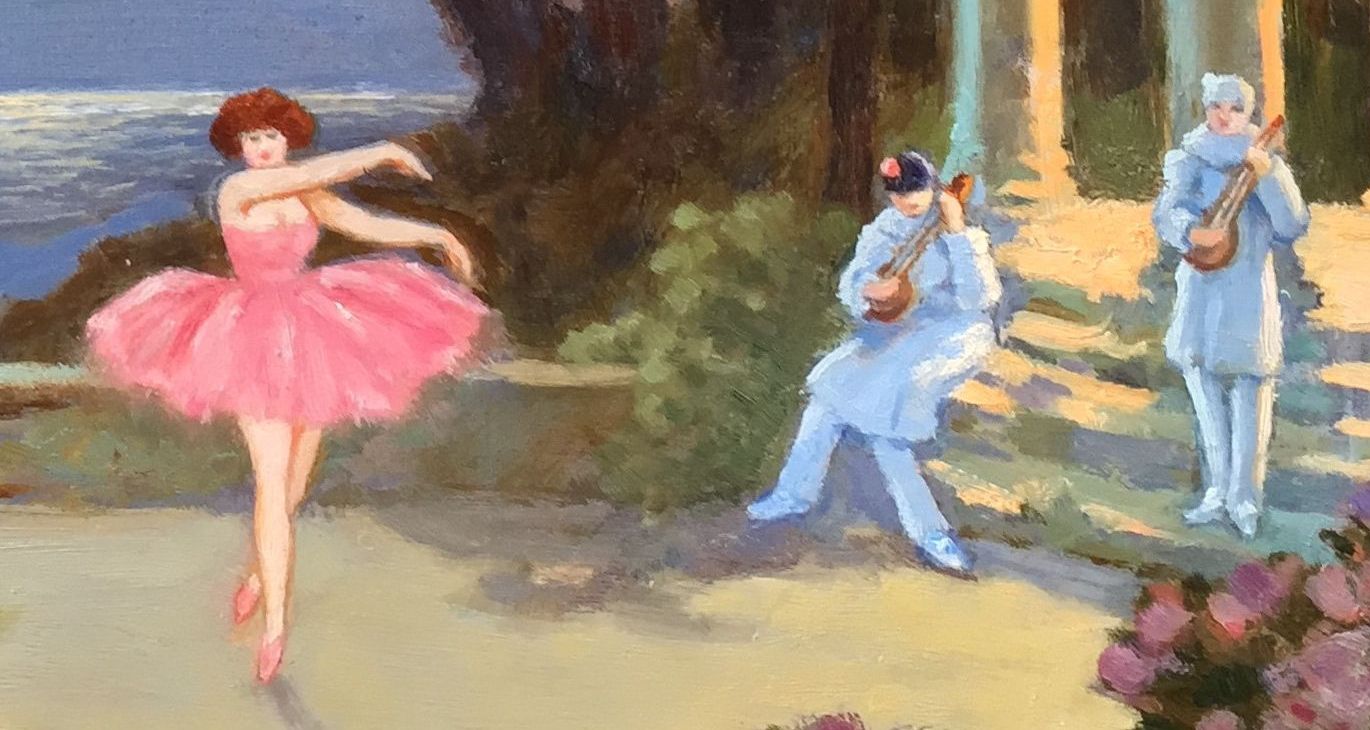 Examining the picture in more detail we find that Cecil Round appears to have captured an evening performance – a ballet dancer performing to the accompaniment of two musicians, playing their instruments (possibly banjos?) whilst dressed in costume. The scene is lit by make-shift lanterns with a full moon also shining brightly in the background beyond, over the sea. The garden back-drop is clearly rather grand – steps rise to a terrace where Corinthian columns rise majestically, like an impressive souvenir from a nineteenth century grand tour! Meanwhile, a low stone wall forms a parapet topped with stone vases and urns; a stone balustrade descends, presumably where steps (or a more gentle slope) lead down toward the sea; perhaps even to a private beach.
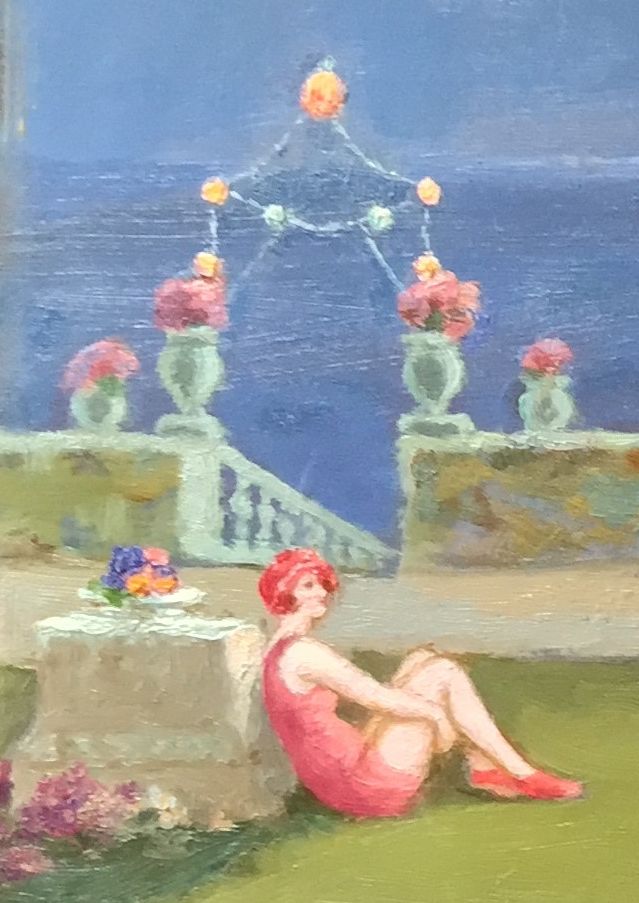 The main dancer is resplendent in her pink tutu which compliments her auburn hair; styled in the period of the day. The second, seated dancer, wears an outfit suggesting the picture dates perhaps from the early 1920s. Whatever the occasion, the colours are bright and joyful – the lavish decorations suggest a celebration of some sort and the setting implies the event has a wealthy host.
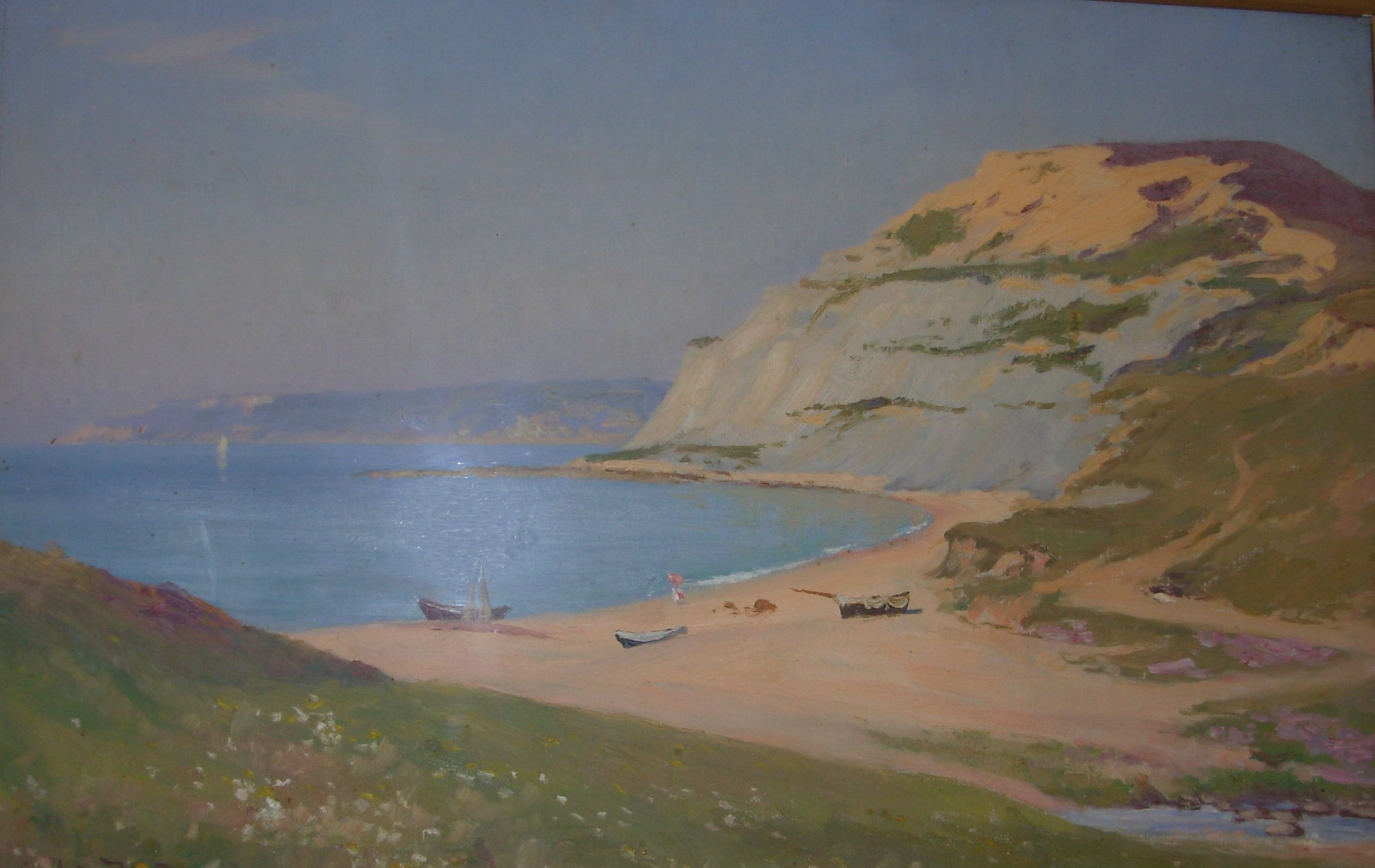 The Golden Cap, which derives its name from the distinctive outcropping of golden greensand rock near its summit, is a hill which is located on the coast of the English Channel, between Bridport and Charmouth, in Dorset. At 191m above sea level, it is actually the highest point on the South Coast of Great Britain and is visible for miles along the coastline. Today, the hill is owned by the National Trust and, forms part of the Jurassic Coast; a World Heritage Site. It is accessible via a coastal footpath from Seatown, and takes around 40 minutes to reach the summit.
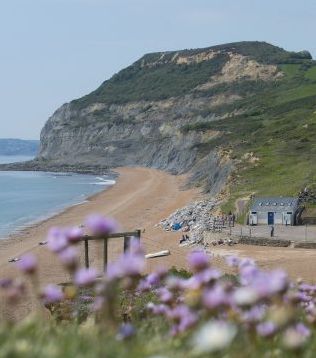 Shortly after creating the Cecil Round website, we were pleased to hear from Gabrielle Mellor who had inherited the painting from her father. Having been brought up in the area, she had particularly fond memories of the Golden Cap and observed how, unlike many artists, Cecil Round had correctly captured the light, within his painting.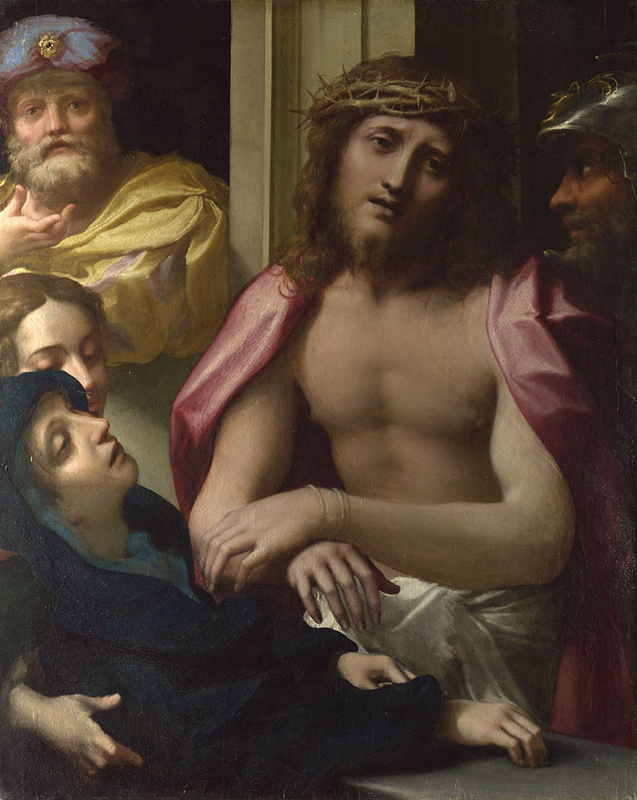
 [Correggio’s Ecce Homo reproduced here with kind permission from The National Gallery, under their Creative Commons agreement.]
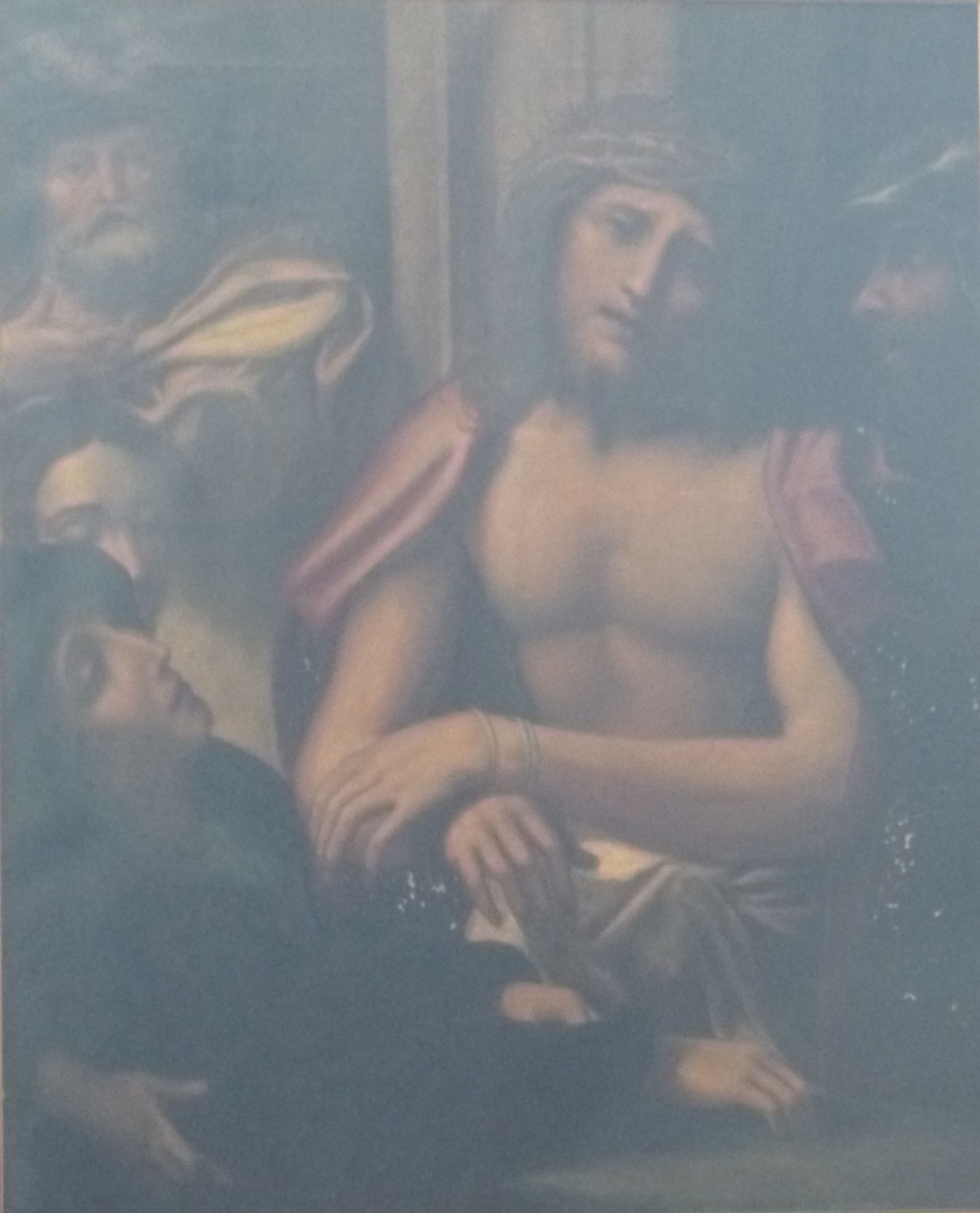
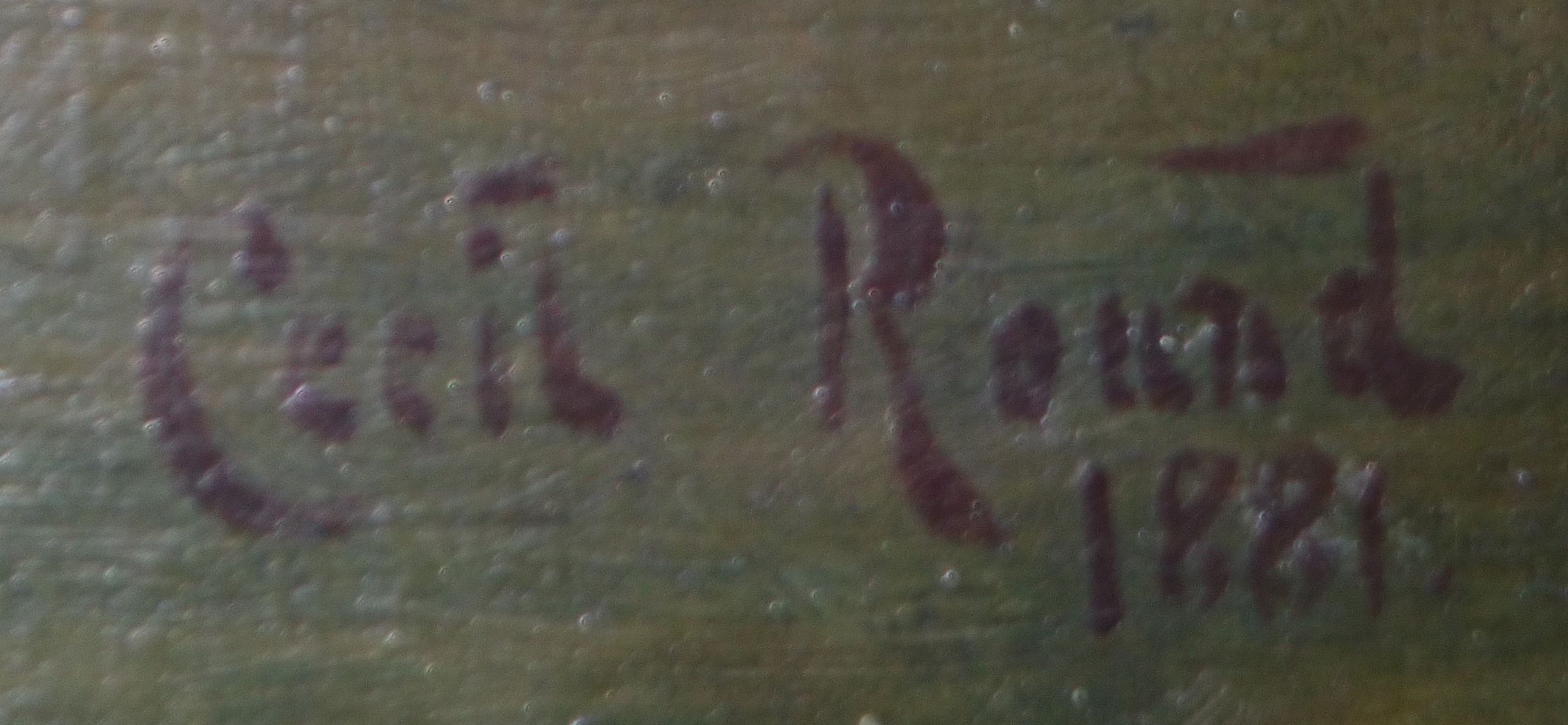 Chris kindly conducted some research into how the painting came to hang in the Lady Chapel – it was apparently donated to the church by the local Carter sisters in 1910; just three years after the church was built. Their father had come across Cecil Round’s work many years before and had admired the young artist’s work. For many years Ecce Homo hung on the pillar on the north side of the nave. Then it was removed to the middle of the south wall. At present it hangs on the south wall of the Lady Chapel. It was only in 2016 that Cecil Round’s signature was rediscovered on the painting, having previously been attributed to “an unknown artist”.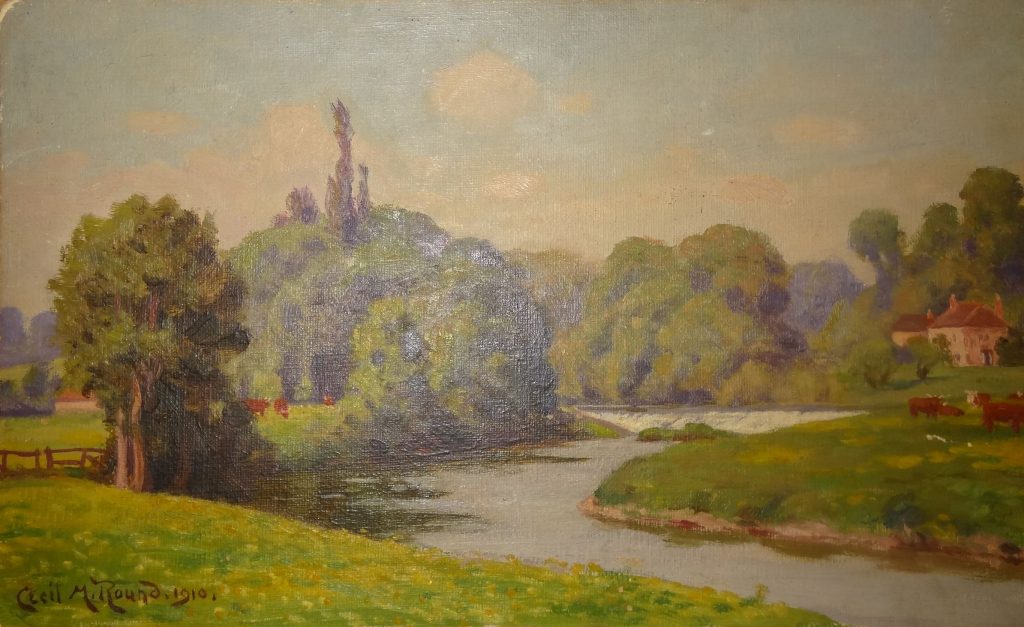
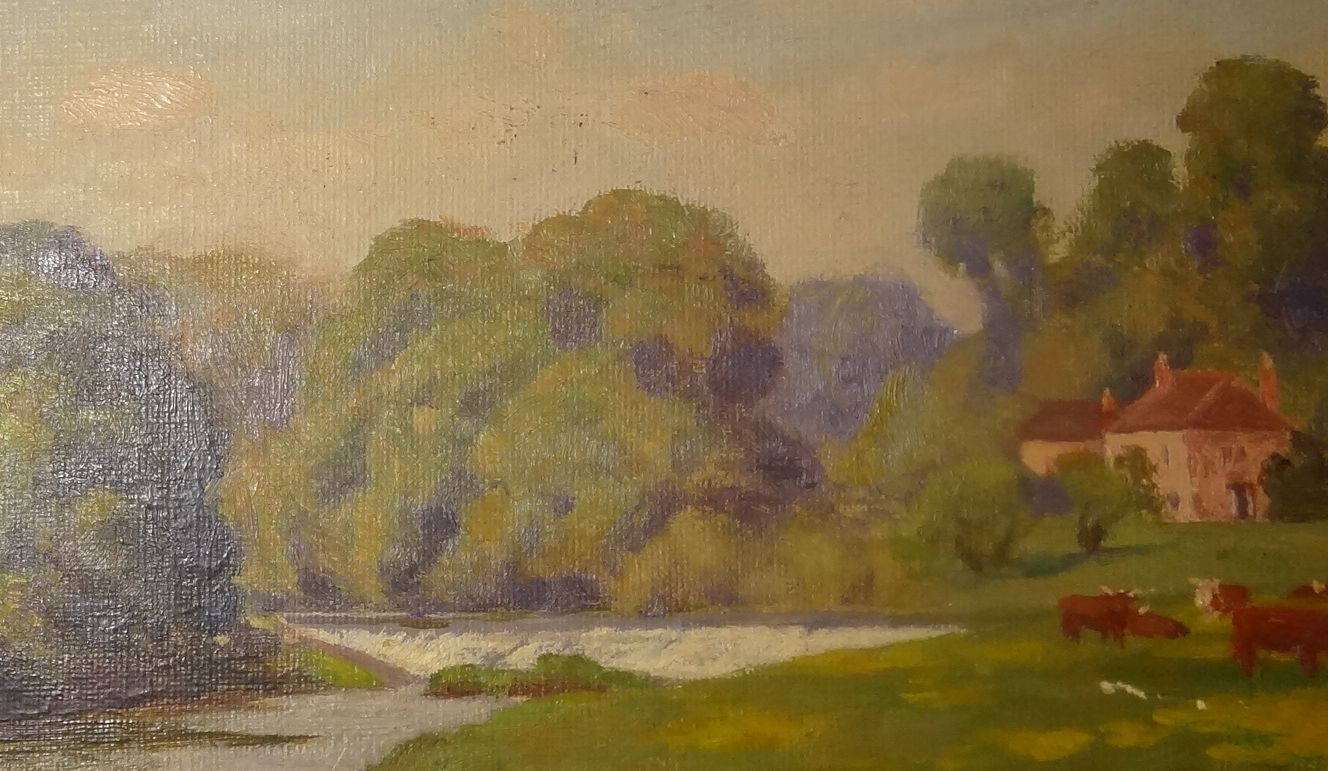 Looking through our online gallery, you will see that the majority of paintings that have dates attributed to the period around 1910, are of subjects within the county of Devon. As such, although we can’t say for certain, we can assume the mystery painting is also of a Devon scene – certainly the meandering river, grazing cattle, distant farm house and what is fundamentally a pastural scene, is not out of keeping with this county.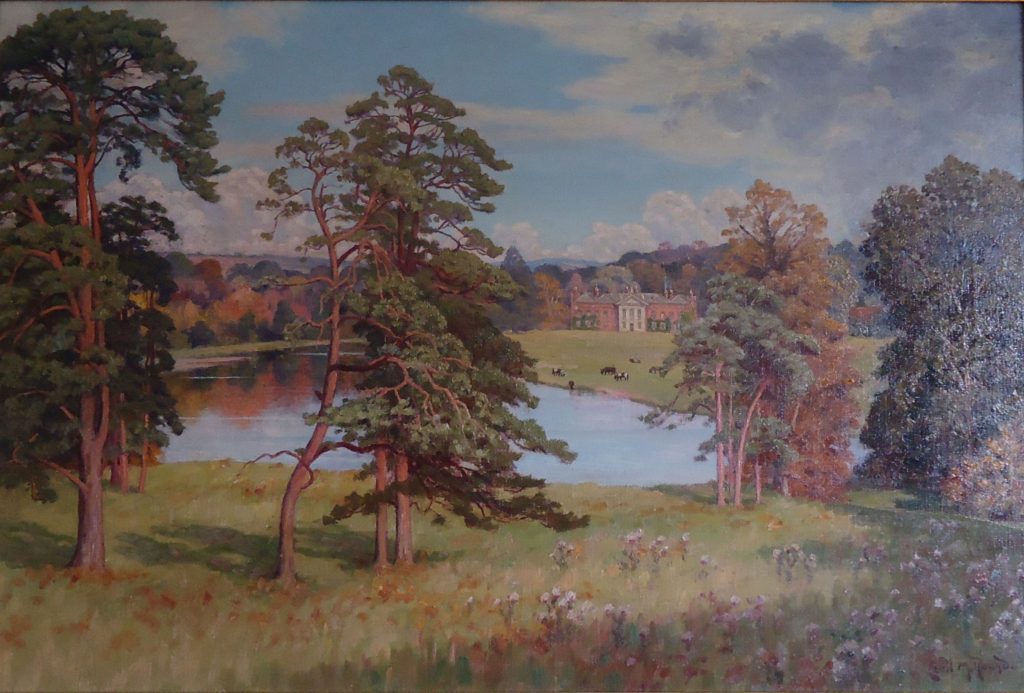
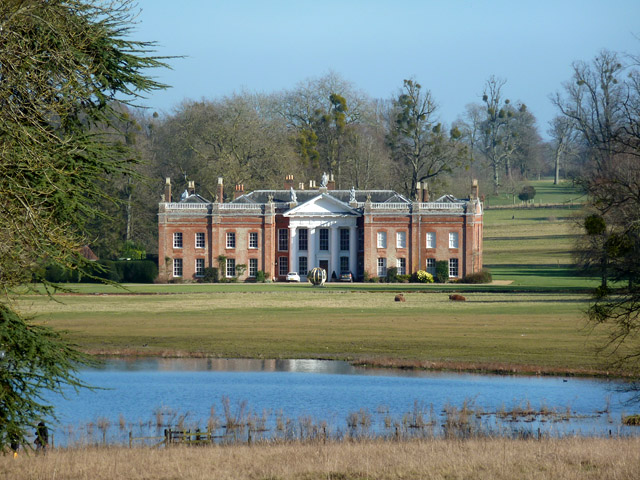 Avington Park is a privately owned stately home. It is located east of Winchester, in the beautiful Itchen Valley, set in its own parkland bordering the River Itchen. Once described by William Cobbett as “one of the prettiest places in the County”, the house and grounds (including tea room), are open to the public every Sunday and bank holiday Monday, from 5th May to 29th September, 2019 (inclusive). Groups are welcome at other times by appointment throughout the year. In addition to this, the property also serves as a wedding and events venue.
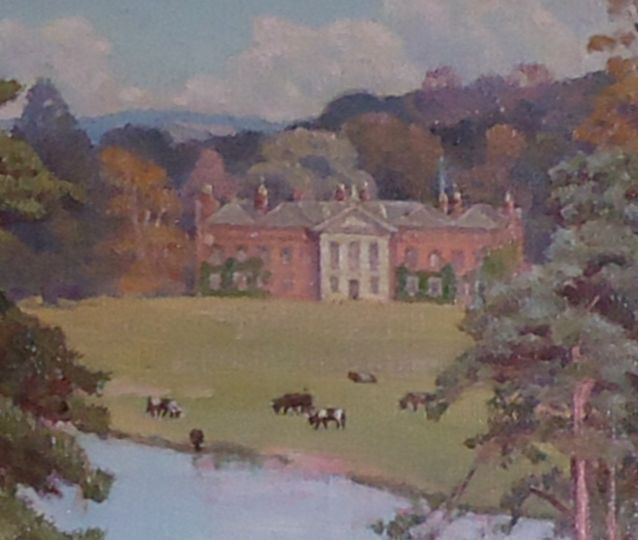 Returning to the painting, we contacted the auction house who kindly collaborated in putting us in touch with the person who had purchased the art work. It transpired that he was in the trade and, although we weren’t initially able to do business, we shared news of the subject matter being Avington Park; hoping that whoever went on to purchase the painting from him, would be all the more appreciative of Cecil Round’s work.
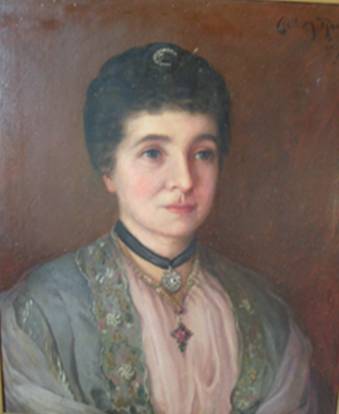
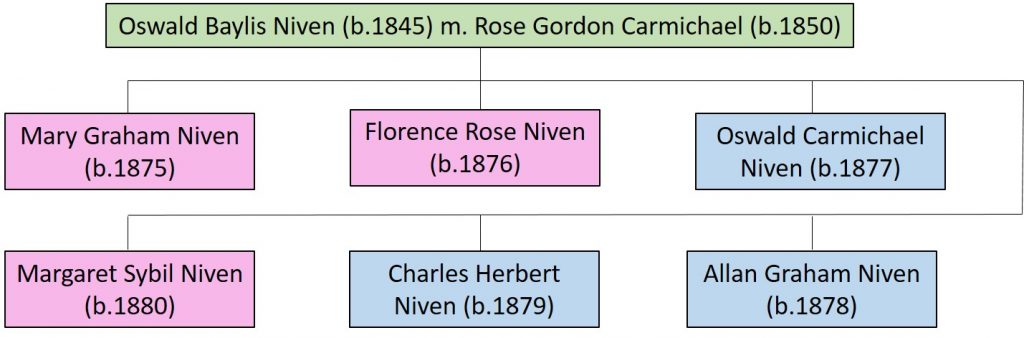
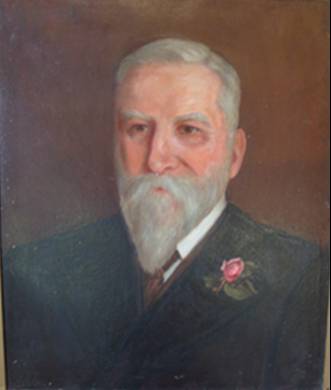 We were particularly excited to see the paintings as they are such great examples of Cecil Round’s portraiture. Unquestionably a pair, the painting of Oswald Niven is thought to be incomplete and has neither been signed or dated. However, even in it’s unfinished state, it commands attention and depicts the distinguished subject in almost regal stature; the pink rose in his lapel, serving to soften the tone.