Fresh to the market for 2023 come two very different paintings – both reflecting a Devon landscape – both being offered for auction through Bearnes, Hampton & Littlewood of Exeter, as part of their Winter Sale on 17th and 18th January, 2023.
The first, a colourful summer garden scene, depicts a young girl with dark hair seated on a deckchair, turning to greet the arrival of her friend who is entering the distinctive cottage garden gate, a short distance away. Both girls are wearing summer dresses of the period; the new arrival of rosy complexion despite donning a straw hat for protection from the intense sun. She carries a small parcel in her hand.
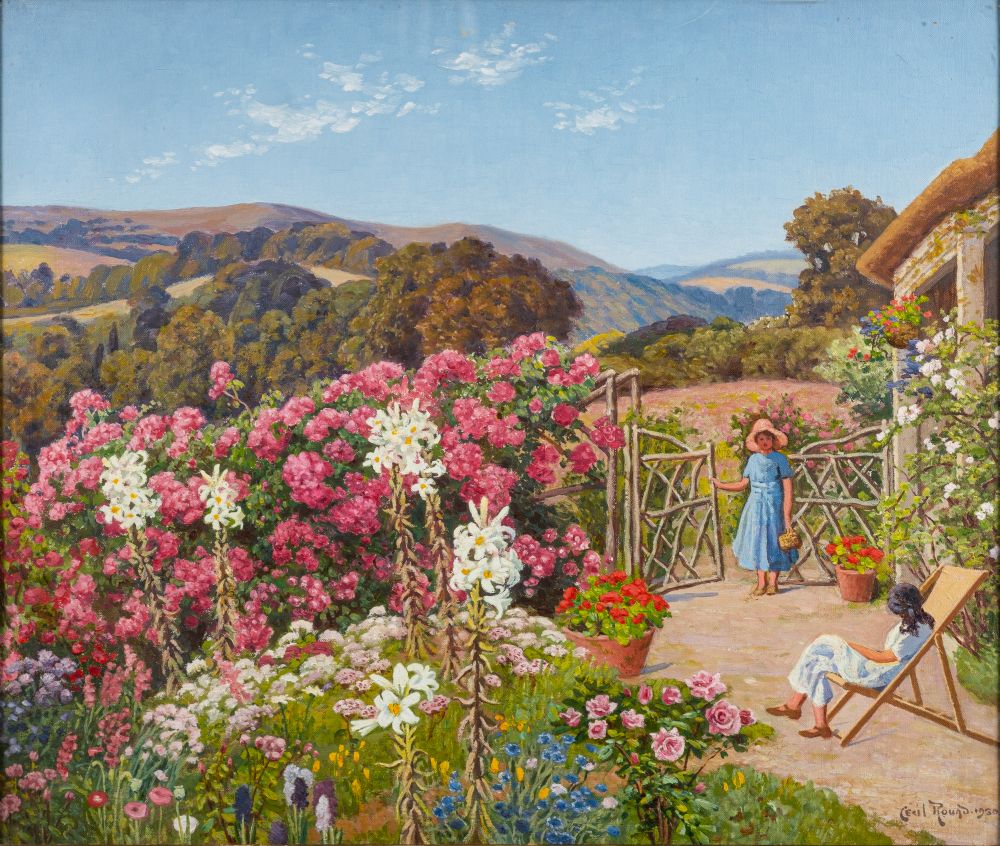 To their right, the thatch roof of a traditional Devon cottage peaks into view, standing proud above the colourful array of cottage garden flowers of a quintessentially English garden setting. Beyond the garden, rolling hills stretch out above a wooded landscape, meeting the clear blue sky dotted with light, fluffy clouds upon the horizon.
Although the painting dates from 1930, the colours remain vibrant, having been mounted behind glass. The painting has been in one family ownership for the past 55+ years, and although the artist has not indicated the location of the garden, we are told that family tradition suggests it is possibly a Dartmoor scene (around Widecombe in the Moor), although sadly, this cannot be substantiated.
Cecil Round died on 20th June 1933 and so this scene was painted towards the end of this life. It is one of only two paintings dated 1930 currently referenced within our database. This in itself doesn’t prove anything but we are yet to come across any paintings with a later date attribution; although there are many undated examples of his work which may succeed it. The painting is being offered for sale via online auction – HERE.
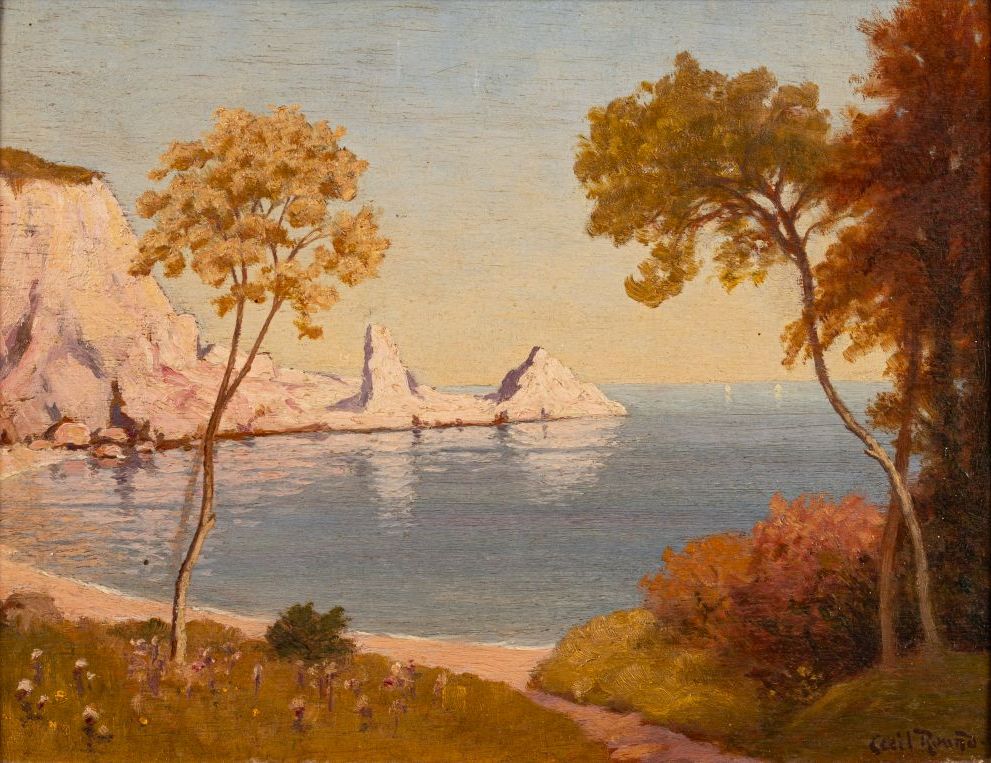 The second painting is more typical of Cecil Round’s coastal landscapes and can more clearly be identified as Anstey’s Cove, near Torquay. The painting is undated but the colour of the shrubs and trees in the foreground, possibly suggest an autumnal setting.
Beyond the path, leading to what appears to be a sandy beach (today it is shingle) within the sweeping cove, exposed cliffs rise above the coastline, clearly reflecting in the clear blue waters of the sea below, where a couple of sailing boats dot the horizon. You may wish to compare and contrast the painting with Anstey’s Cove today using this tourist office video from 2018 as your guide – HERE.
Cecil Round was familiar with Devon throughout most of his life, having first painted here in the 1880s, and having been living in Torquay when he died in 1933. Of particular relevance to this painting, he is known to have painted Anstey’s Cove in 1890 but our records indicate this was a larger painting, annotated accordingly.
The painting is being offered for sale via online auction – HERE.
As ever, we leave it to the collector’s own judgement in terms of determining valuation and price tag, whilst noting that we have no affiliation to the seller of either painting or to the auction sale. Happy bidding!

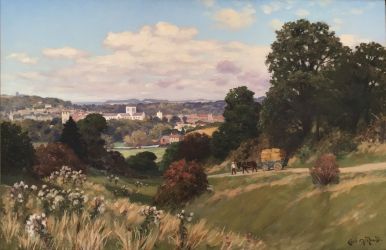
 Back to the market for 2024 comes, Summer Garden, which is being sold under the working title, Landscape With Girls In The Rose Garden, by Lodge & Thomas Auctioneers in Truro as part of a two-day auction event. Lot 1805 is scheduled to go under the hammer on Friday 31st May 2024.
 Thanks to everyone who has been in touch with us throughout the past year, and especially to those of you who have been kind enough to share news and images of your Cecil Round paintings, for our Online Gallery and News updates.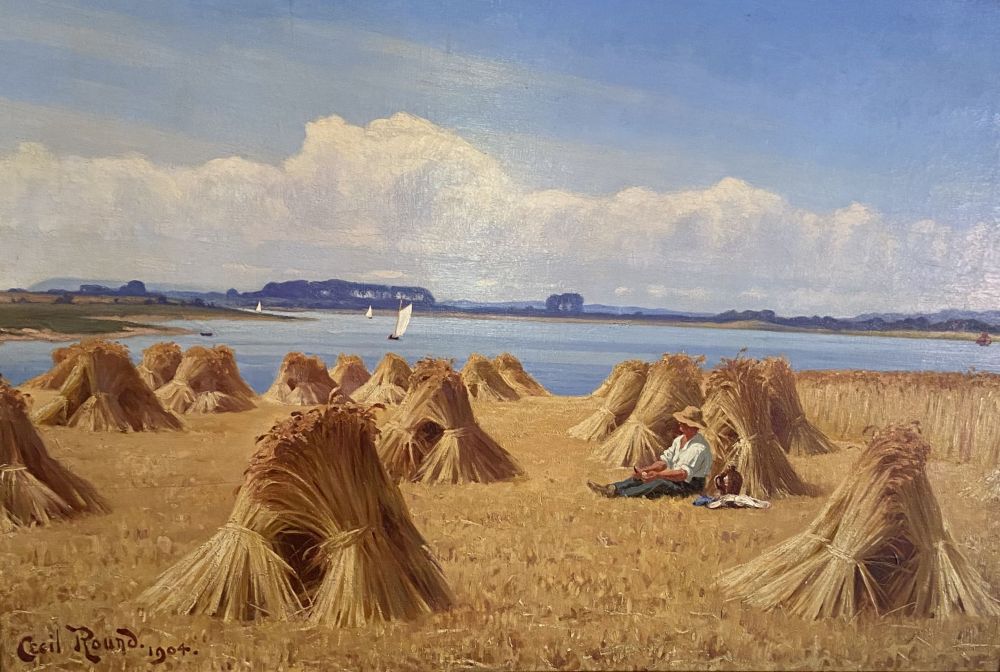
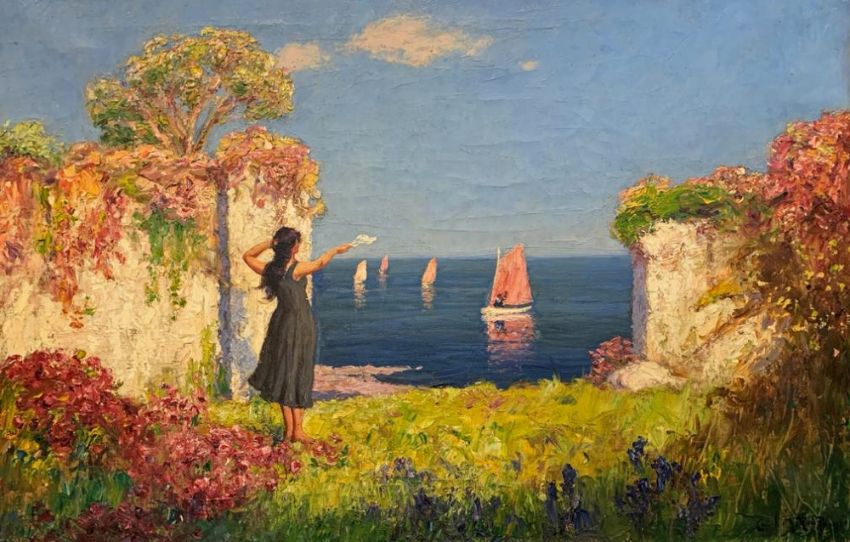 Included in the sale as Lot 501 is a wonderful painting by Cecil Round. Signed and titled on the verso, Greeting in Sicily, the oil on canvas painting dates from 1920 and depicts a very colourful scene: a young girl in summer dress, standing amongst the radiant flowers of a walled garden adjacent to the shoreline. With the sun casting reflection across the water, her left hand is held up shielding the intense sunshine in playful salute while, in her outstretched right hand, she waves what looks to be a white handkerchief or possibly one could surmise, the white paper of a personal letter. She does so in greeting to a pink-sailed dinghy, whose sole occupant approaching the Sicily shore, returns her wave.
 Today marks the tenth anniversary of our Cecil Round website. What started out as an online gallery of some twenty or so pictures, now includes seventy examples of Cecil Round’s work.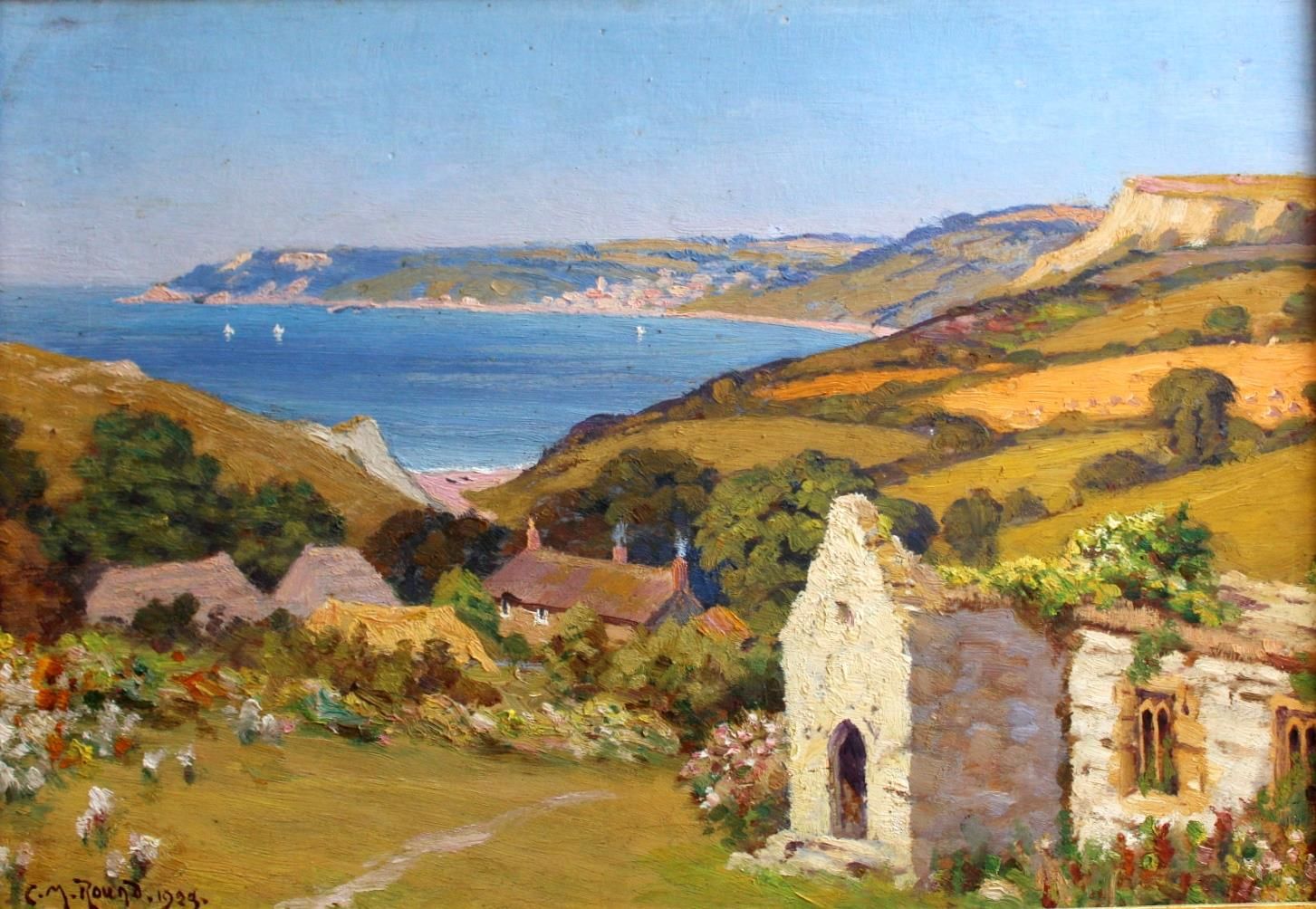
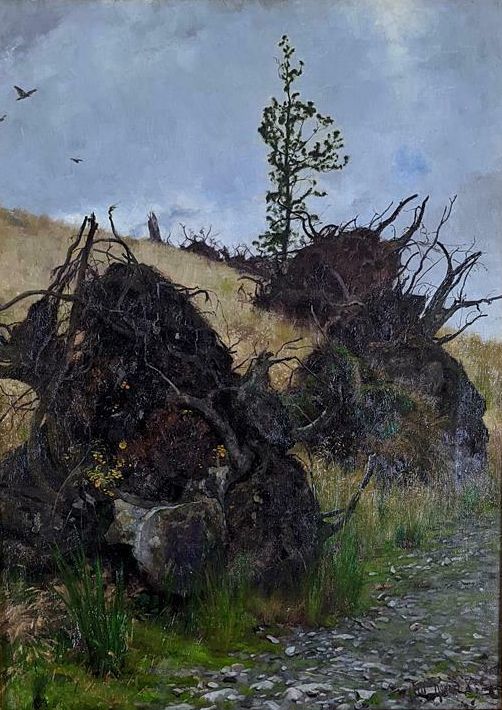
 Welcome to our twelfth ‘Spotlight Feature’. As a change to our normal review, rather than concentrate on a particular painting, this month we thought a more general appraisal of the changing face of Cecil Round’s signature, might add real value to the authentication of his work and to the general conversation about his painting.
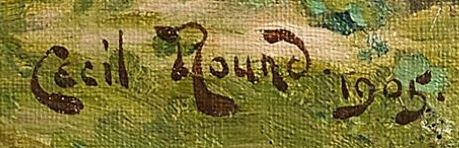 There appears to have been little consistency in terms of how Cecil Round signed his name – sometimes opting for ‘Cecil Round’, at other times, ‘Cecil M. Round’, sometimes ‘C. M. Round’ or even just ‘C. M. R.’. As such, rather than concentrate on the differences, let us instead focus on the similarities between all of the various incarnations: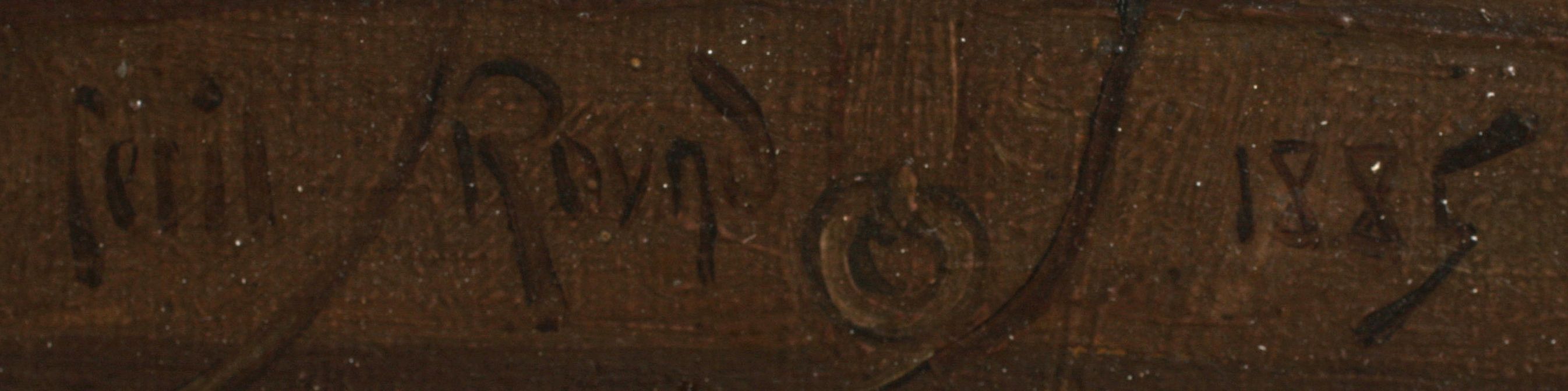
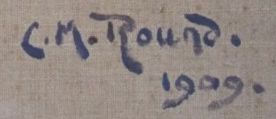
 [Here is a sample selection of Cecil Round’s signature, highlighting the common features.]
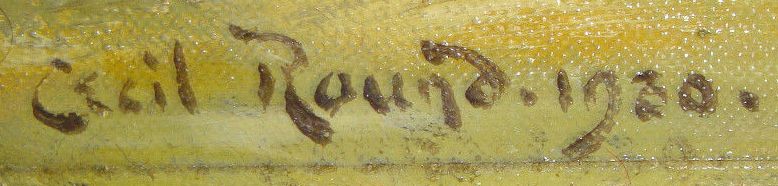 The other area of commonality found with many artist’s signatures, is the location of its placement upon the board or canvas. However, it is fair to say that we have found no consistency in terms of where Cecil Round signed his paintings – front, rear or both; top or bottom, left or right corner or centre-rear. We’ve seen evidence of all of these locations or combinations thereof. As such, we conclude that it is the five distinguishing factors we have highlighted above, in terms of the style (rather than the position) of Cecil Round’s signature, that are the best pointers to authenticity.