 Welcome to our fourth ‘Spotlight Feature’. About the time we were completing work on our last feature, ready for publication in early January, I was excited to receive news of ‘A Devon Lane’. The timing was impeccable. Having just written an appeal for collectors to consider dusting off their Cecil Round paintings and getting them restored in the New Year, here was a painting, very much in need of restoration.
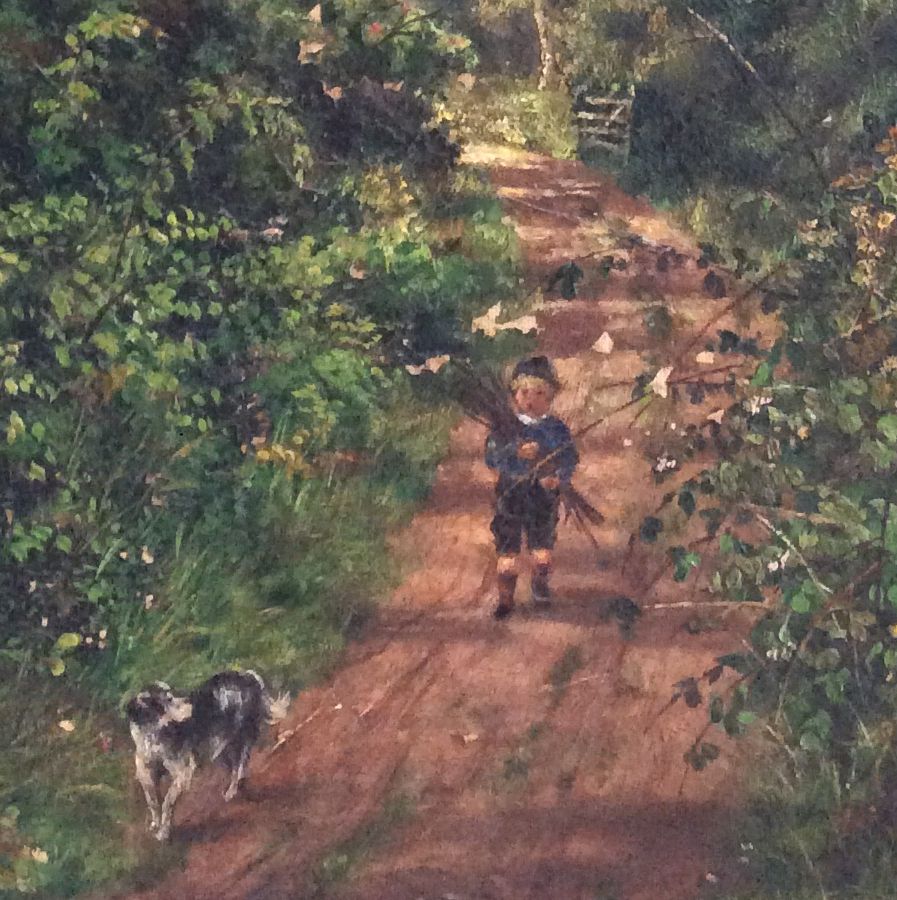
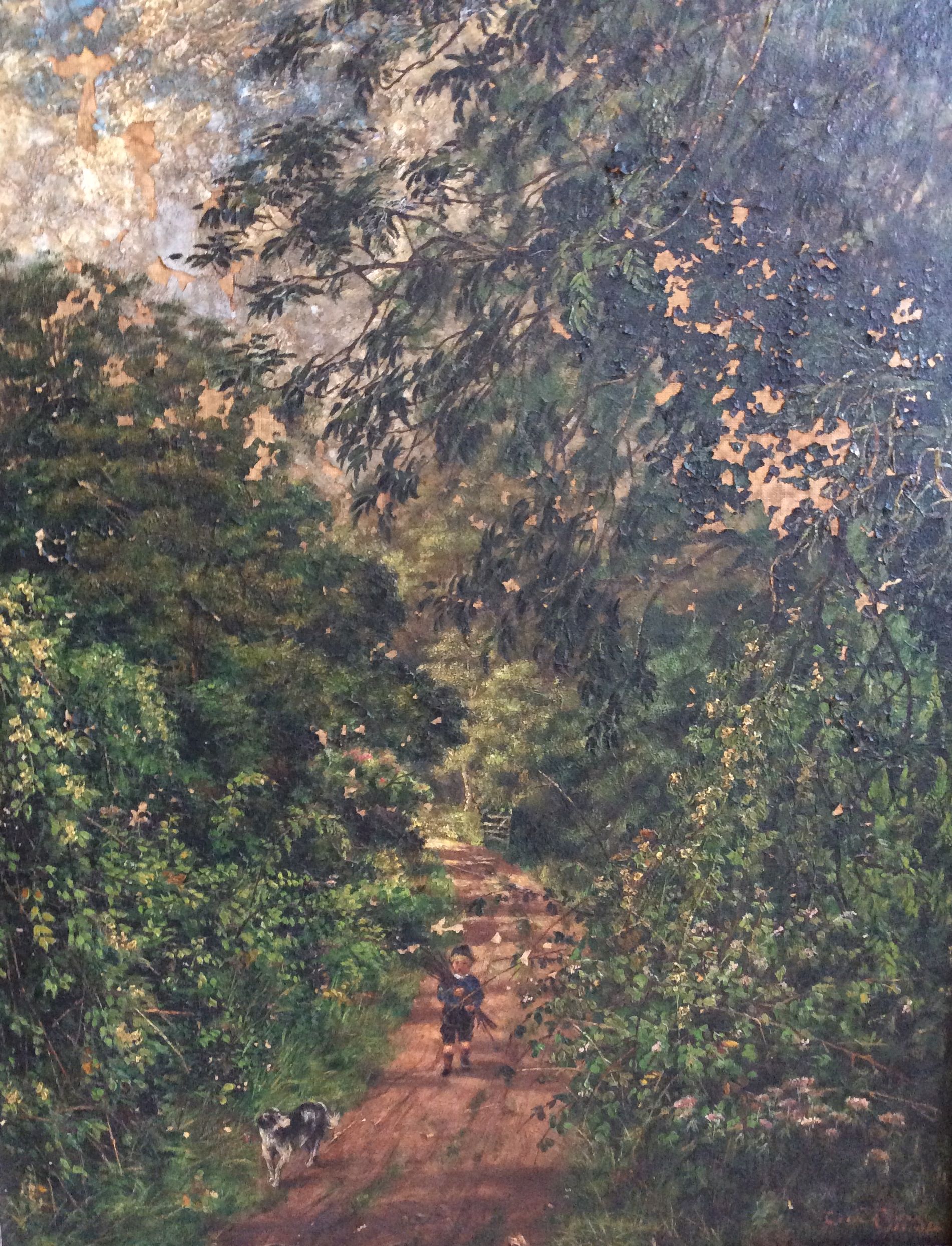 ‘A Devon Lane’ features a country scene from the 1880s – a boy walking along a farm track, with his arms full of kindling, presumably on an errand to collect wood for the cottage fire. The sun is shining although only in places does the sunlight penetrate the canopy of the rough lane, which is overshadowed by trees and high foliage. As such, it makes for quite a dark scene – dark, but in no way sombre. The rich palette of mixed green brings the foliage alive and gives depth to the scene, drawing the eye to each shrub in turn. In the background we see an open farm gate with the welcoming promise of sunlight beyond. Accompanied by his attentive, characterful dog, it is a scene that captures the innocence of childhood; tinged with a suggestion of the realities of country life in the late nineteenth century.
To set the context around rural and agricultural life in Devon during the 1880s, we have conducted some online research. It appears that the close proximity of available work, ensured that agricultural wages remained high, especially in the areas close to Plymouth and also, the larger towns to the north of the county. Heath, described it thus, in The English Peasantry:
“Many mid-century commentators refer to the operation of similar forces in several districts, and the following example (from 1874) is typical of many: The new Devon and Somerset line from Taunton to Barnstaple, then in process of completion, passed across the north of Devon, and necessarily created a demand for the best and strongest of the agricultural labourers. In the neighbourhood of North Molton, too, iron and copper mines had been opened; so farmers in these districts were compelled to give their men 12 and 13 shillings per week.”
 Greg Finch includes this quotation in his excellent analysis of Devon’s Farm Labourer’s in the Victorian Period and goes on to conclude:
“It is not necessary to find a direct relationship between migration rates and wage increases for it to be clear that the availability of alternative work and a declining supply of labour in the countryside exerted upwards pressure on agricultural wage rates after 1870. What is surprising is that the changing circumstances, particularly the continued rise in money wages during the ‘Great Depression’ should be accepted with such relative equanimity by the county’s farmers, especially in the light of Girdlestone’s experiences at Halberton in the 1860s.
“Remarks to the 1881 Royal Commission expressed some concern that ‘they have copied those higher up and lived too extravagantly’ and that partly as a consequence ‘they take less interest in their work and their employer’s welfare’. Labour was said by some to be ‘scarcely equal to demand’, yet apart from these perennial grumbles there were no serious and sustained complaints from the employers about the rising cost of farm labour.
“Rew’s report on agriculture in north Devon in 1895 is notable for the fact that at the well attended public meetings he organised for the region’s farmers, and at which they were invited to air their grievances, the high price of labour did not figure in discussion. Instead, attention was confined to the level of rents, the Law of Distress, the 1883 Agricultural Holdings Act, the incidence of local taxation and the conditions of sale of foreign meat. It is too much to surmise that Devon’s farmers were of the collective and magnanimous opinion that labourers were at last beginning to receive the just rewards they had always deserved. The explanation must be sought in more strictly economic territory. “
[You can read his full analysis of the period at the following link: HERE.]
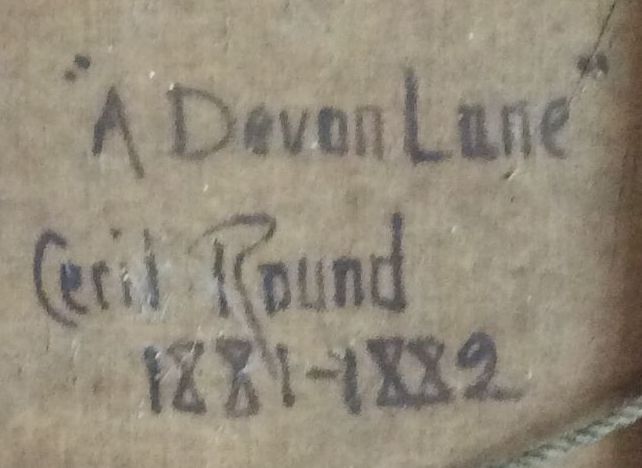 Returning to Cecil Round’s painting, the picture has been painted on canvas and the verso is of particular interest. Here, Cecil Round has inscribed the title of the painting alongside his name, accompanied by the date, ‘1881-1882’. Normally, Cecil Round’s work is attributed to a single year and so this is worthy of mention. In fact, as far as I can recall, the only other of his paintings we have come across inscribed with a date range like this, is from the same period: “A Mackerel Day”. The latter, depicting another Devon scene but this time more precisely identifiable as Petit Tor and Oddicombe Bay near Torquay, also dates from 1881-1882.
As such, although there is no real hope of identifying the actual Devon lane that was the subject of his painting, the existence of the second landscape of another Devon scene which was painted during the same period, provides further clarity around the likely neighbourhood of his work.

Sadly, the painting is in very poor condition today but we are grateful to the owner for reaching out to us. You will see from the close-up image, the paint is now flaking and is in a very unstable condition throughout. However, we are told the painting is available to purchase, if anyone feels able or willing to take on this restoration project – and what a restoration it would be! Hopefully we can bring some good news of ‘before’ and ‘after’ photos, in the future! Do please get in touch if the project may be of interest and we will be happy to pass on your contact details, to the current owner.

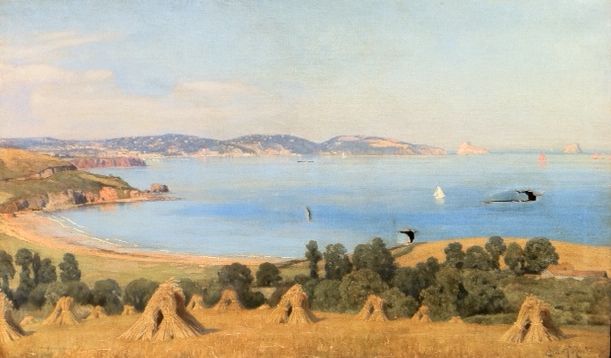
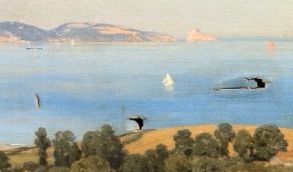 This is a close-up of how the painting looked prior to restoration. The canvas is larger than average (circa 3ft x 5ft) and, as you can see, had suffered several large tears across the centre of the picture. Having sought the advice and services of a professional, the picture was duly restored, as shown below.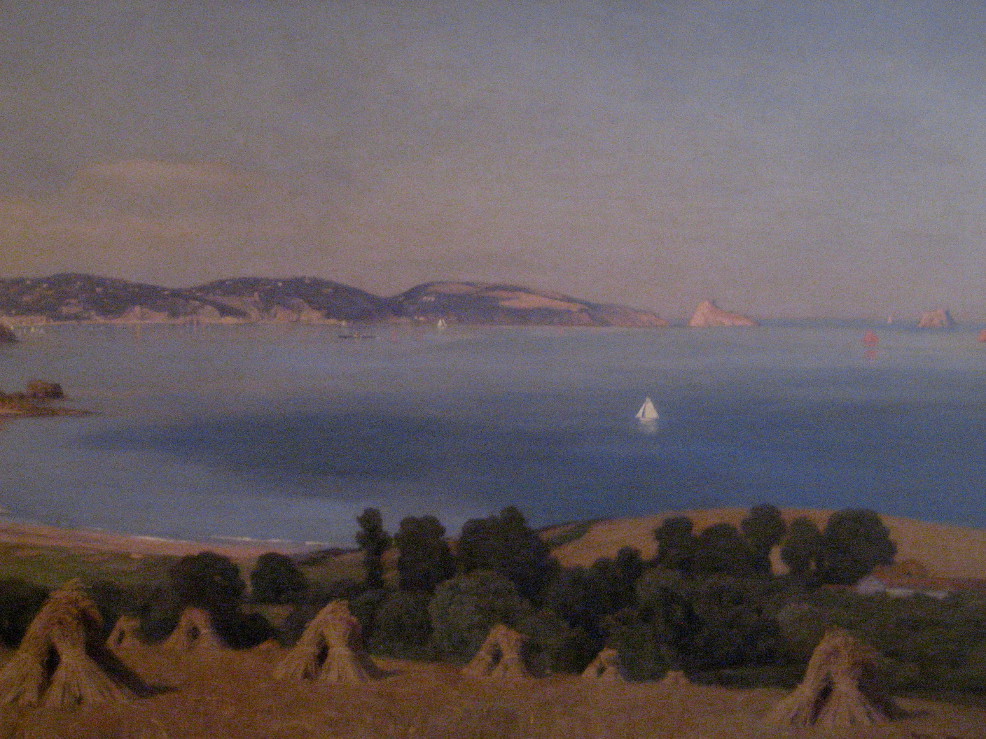
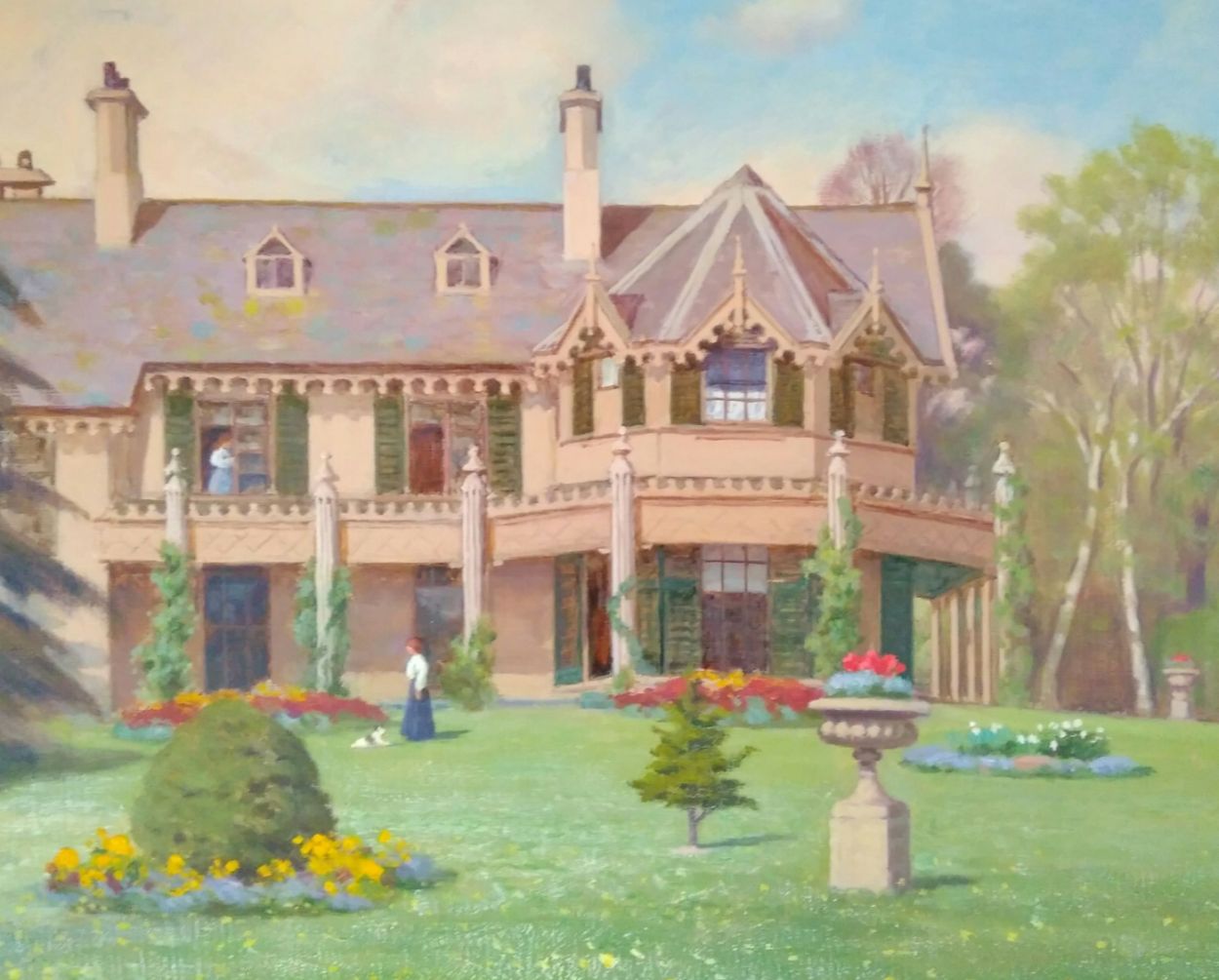 Feltrim was located on Topsham Road, between Exeter and Topsham, which was lined with large homes of the local gentry at the turn of the nineteenth century. West Winter Hill was situated adjacent to one such house – with the understated name of ‘The Cottage’ – which was listed in the Post Office Directory of Exeter 1895-96, as being occupied by a James Lawless. The house was later renamed ‘Feltrim’ which is as Cecil Round found it, in 1910.
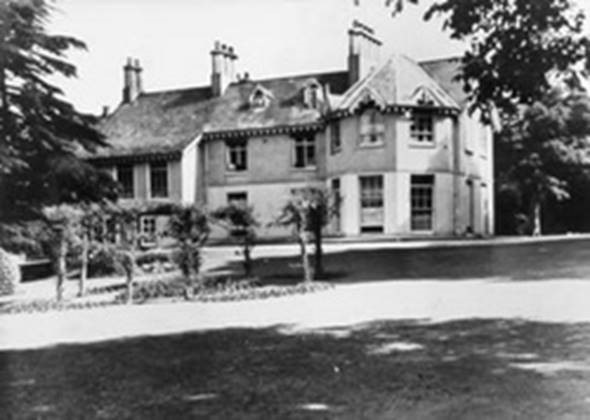 Feltrim was later sold to the Reverend William Henry Oxley who was living at the house in 1923 when King’s College Cambridge offered for sale, the neighbouring land at West Winter Hill (described as measuring 4 acres 3 roods and 23 perches*). Oxley, a campaigner for the Deaf and Blind, bought the land for £1,300 but died the following year leaving the property to his son, Selwyn Amor Nathaniel Oxley, a pioneer educator of the deaf. Selwyn Oxley subsequently sold the Feltrim Estate to John Gregory Hubbard Reader, a Coachbuilder from Whimple.
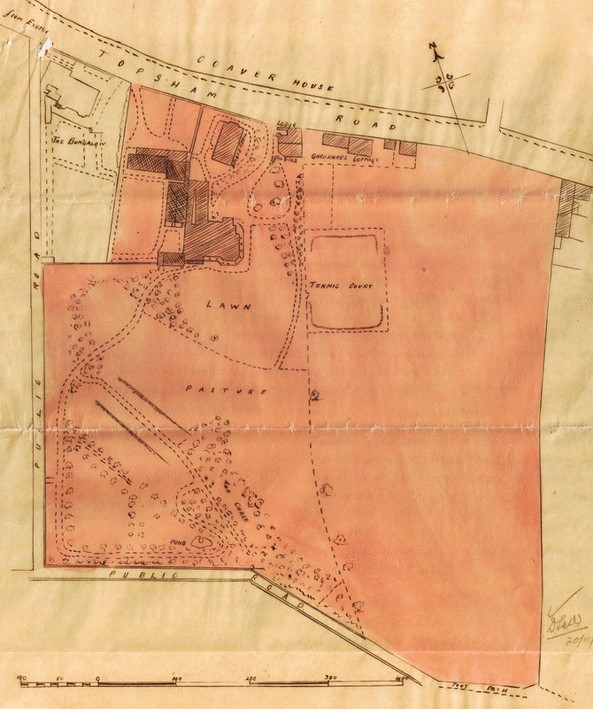 In 1929, Dr Barnados moved their children’s home for girls from Clifton Hill to Feltrim having, presumably, acquired the property from Mr Reader. Plans to build houses on West Winter Hill were mooted at about the same time. These houses can clearly be seen on the c.1932 map from the Barnados website.
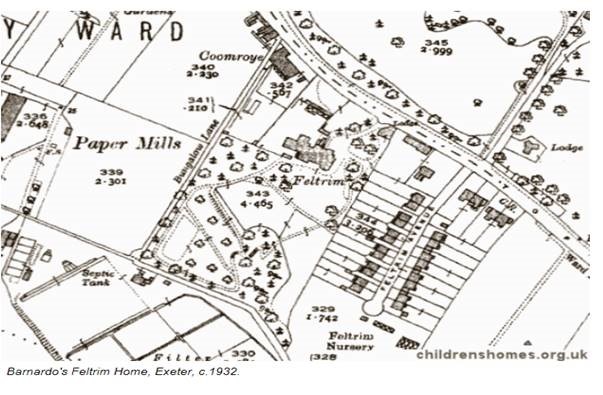 The Topsham Road home stood between the present-day Norwood Avenue and Feltrim Avenue as shown on the 1932 map. Feltrim could house up to 50 girls aged six to fifteen.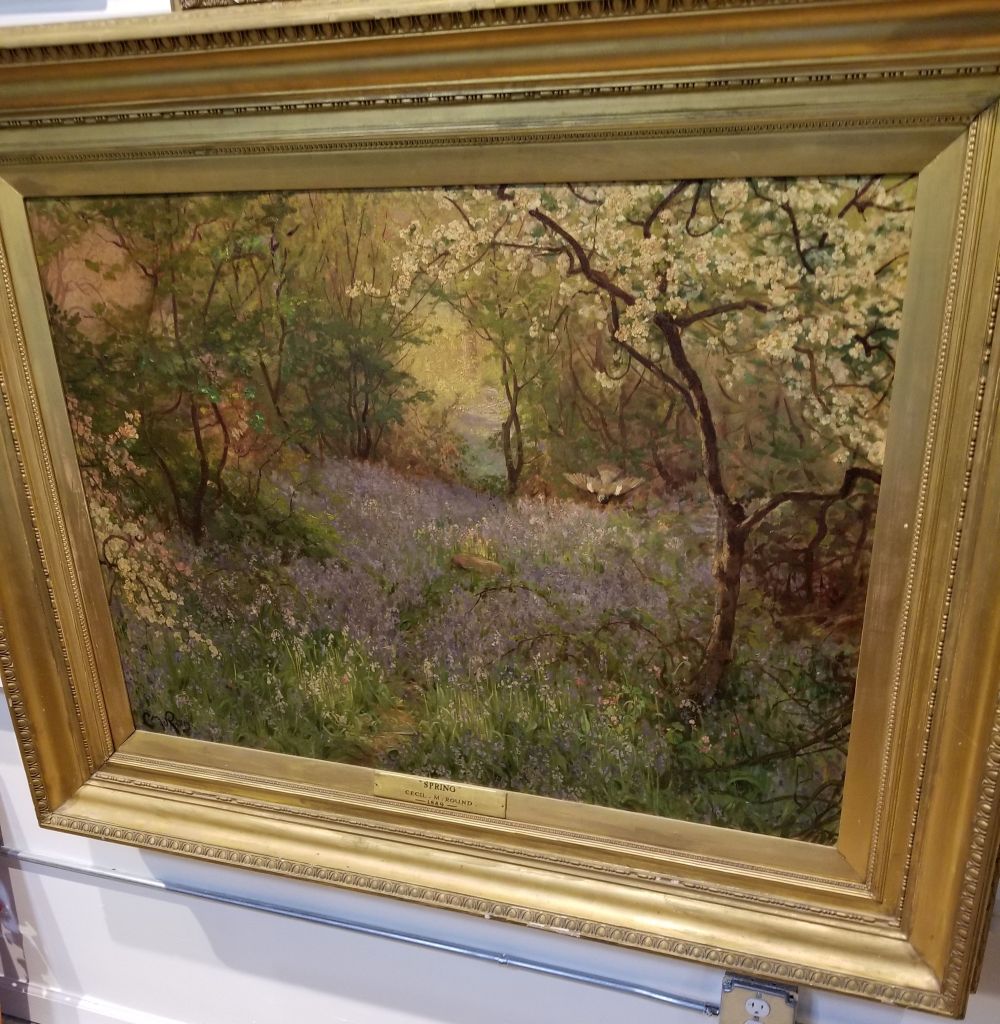
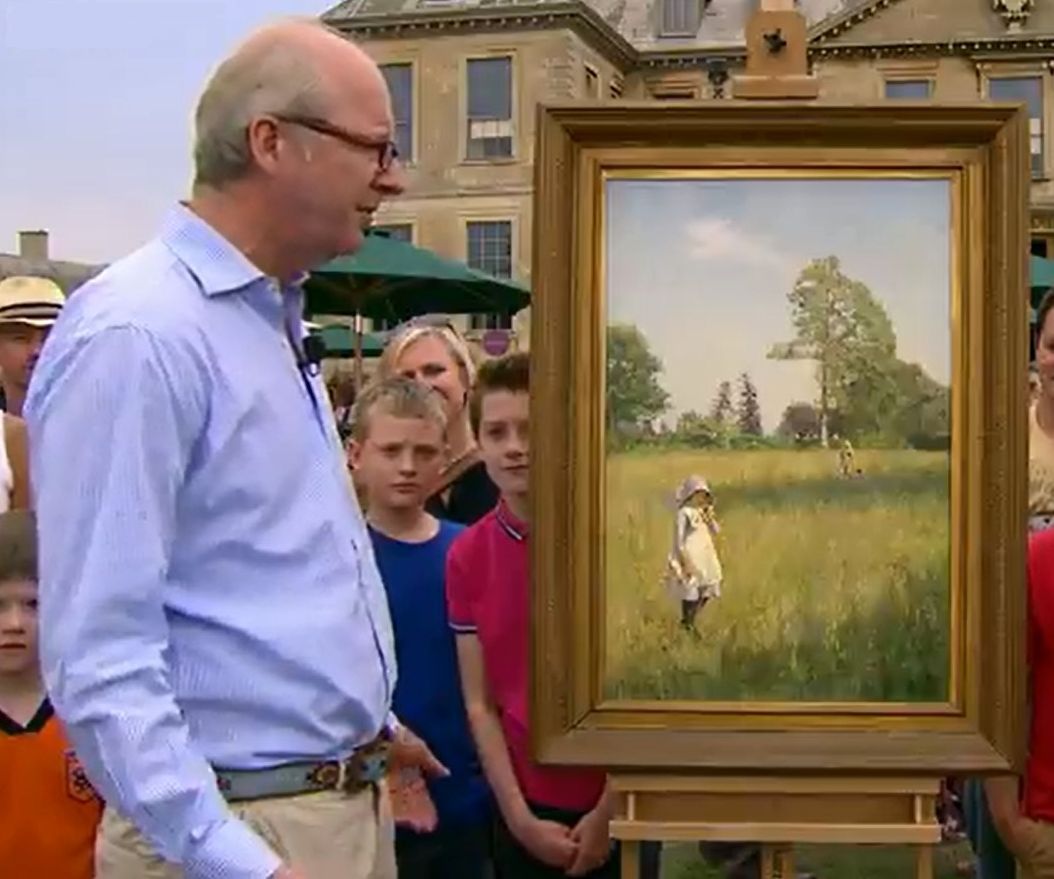 The painting was featured in Series 37 of the television show when, in Episode 17, the team visited Belton House in Lincolnshire. It was first broadcast on 5th April 2015.
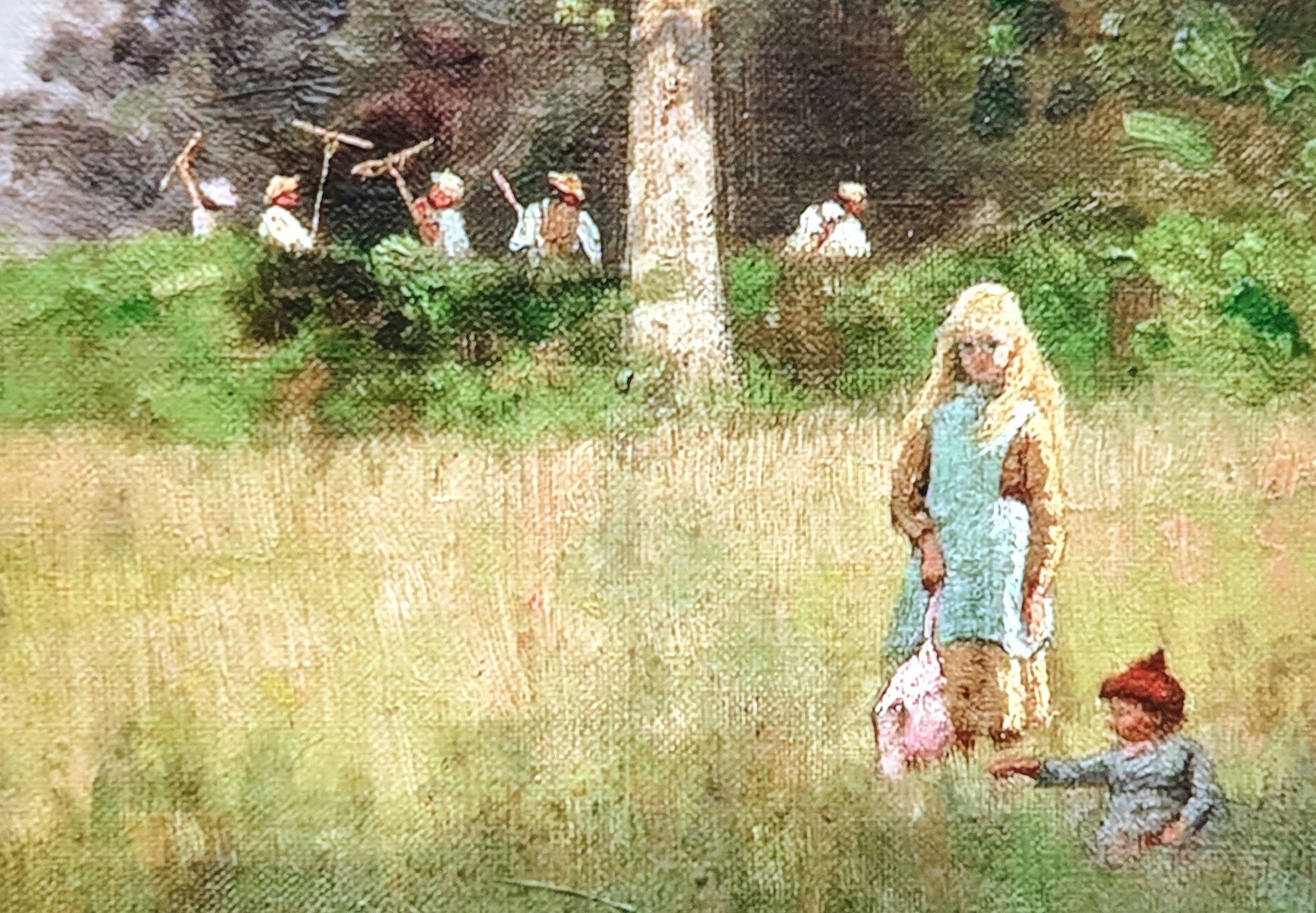
 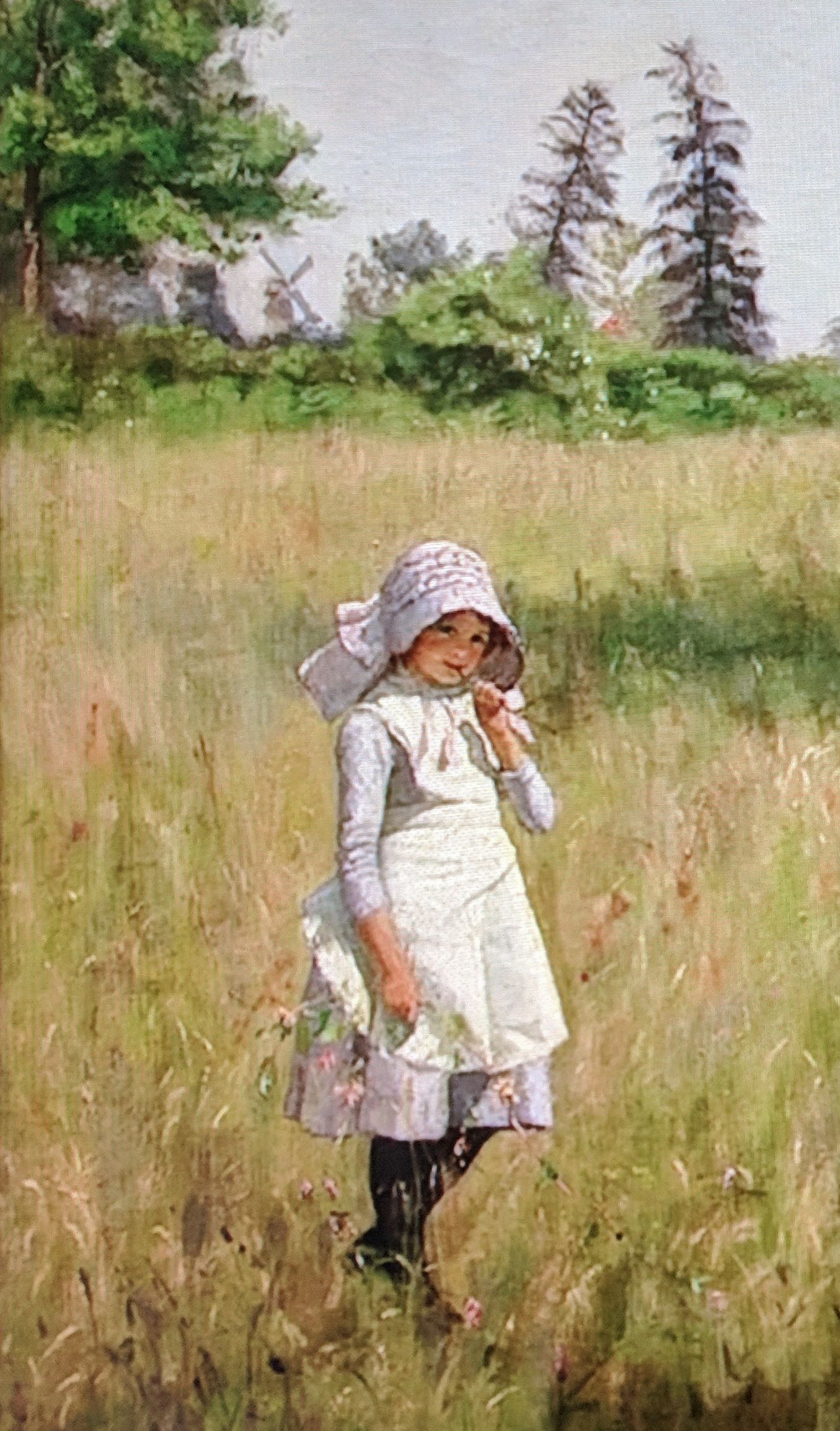 As part of his analysis of the painting, Mark Poltimore noted the windmill and the five men making hay in the background. This led him to suggest the scene is probably of somewhere in East Anglia.
 Unfortunately, the BBC no longer have this particular Antiques Roadshow episode available on their iPlayer. However, should it return, you will find details on their website at:
 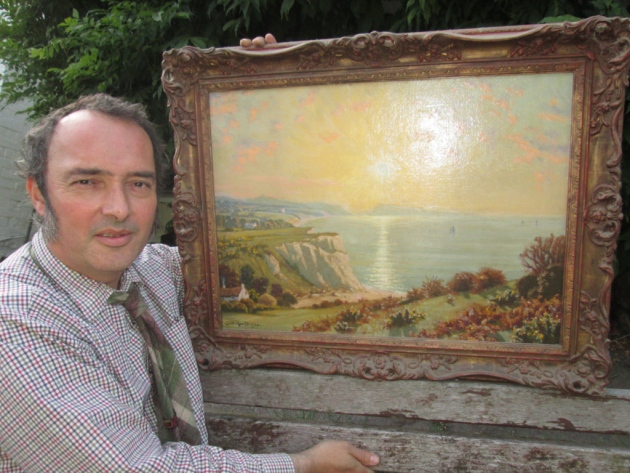 “It sums up romantic notions of days gone by with little thatched fishing cottages tucked away in narrow valleys; a nostalgic piece of whimsy, almost befitting a chocolate box.” The painting, David says, has little or no economic value and is no masterpiece. Yet it is a piece that successfully communicates between artist and audience, stirring emotion and effecting a response.
 We’ve been struck by the number of really interesting back-stories that often accompany your correspondence – quite literally, from all over the world. With this in mind, very shortly it is our intention to start featuring some of these stories, along with more detailed close-ups and analysis of his pictures. We will also start to feature more general news stories and information relating to Cecil Round’s work. We hope this will bring added interest for visiting enthusiasts and encourage others to continue sharing their pictures and stories!
 NOTE: To check for recent updates to our website, please refer to the notes in the right-hand margin.